Water source control and safety checks
We help confirm the loss is contained, flag electrical and slip hazards, and set a plan for safe access before equipment goes in.
Serving Elk Grove, California & surrounding areas
24/7 Emergency Response
Emergency restoration · Elk Grove
When water is spreading, every hour matters. Our team responds fast, extracts water, sets drying equipment, and documents the loss so you can protect the structure and get back to normal sooner.
Call Now +1 279 399 4623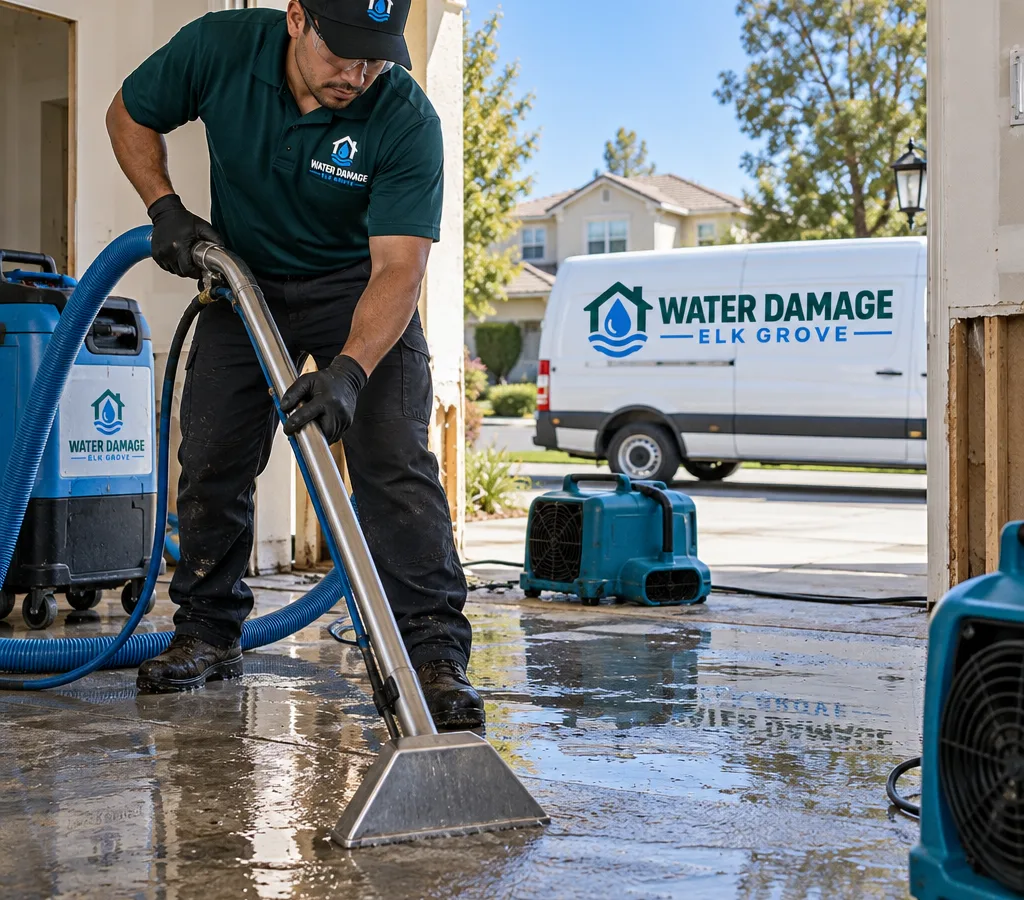
Early action limits the spread
If you are dealing with a supply-line break, an overflowing toilet, a water heater leak, or stormwater pushing in where it should not, emergency water damage restoration in Elk Grove is about stopping the spread first, then drying what can be saved, and only then rebuilding what cannot. Water moves through flooring, baseboards, drywall, cabinets, and insulation quickly. The longer moisture stays trapped, the more likely you are to see swelling, delamination, staining, and microbial growth.
Water Damage Elk Grove provides Elk Grove's local water damage restoration service with a focus on immediate stabilization: water extraction, controlled drying, and a clear scope of what needs to happen next. We work in homes and commercial spaces across Elk Grove, including newer developments where slab-on-grade moisture can linger under LVP and tile, and older properties where plaster, wood floors, and multiple layers of finish can hide wet materials.
What to do while you are waiting for help:
Complete emergency mitigation
We help confirm the loss is contained, flag electrical and slip hazards, and set a plan for safe access before equipment goes in.
Truck-mounted or portable extraction removes standing water from floors, carpet, pads, and low areas so drying can actually begin.
Air movers and LGR dehumidifiers are placed based on materials and room layout, then adjusted as readings change.
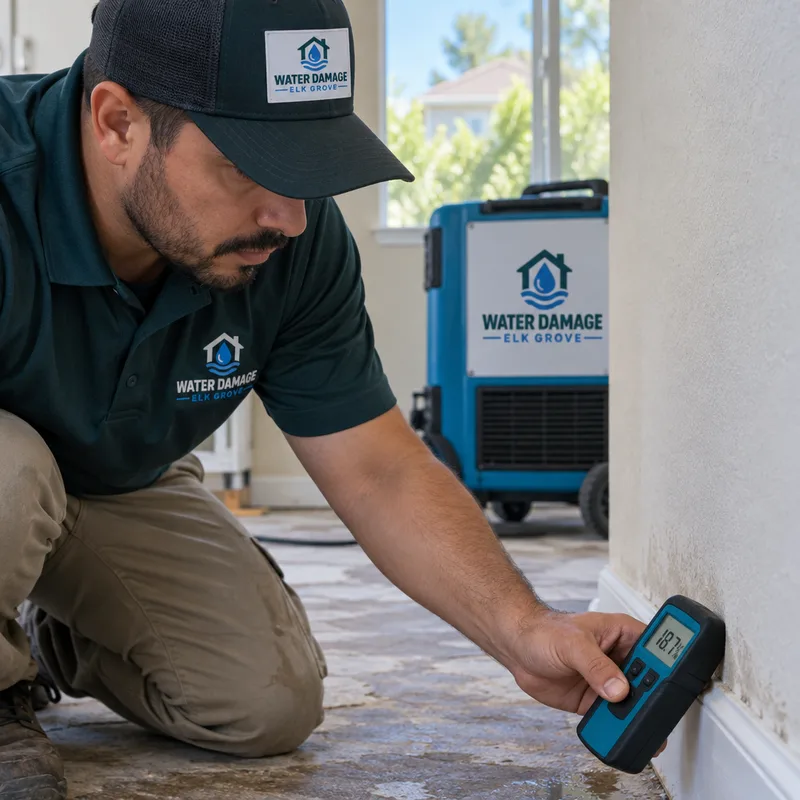
We use moisture meters and thermal imaging to locate hidden wet areas and document conditions for a clear, defensible scope.
If drywall, insulation, or cabinets are saturated beyond saving, we remove only what is required to dry the structure correctly.
Sanitizing and deodorizing steps are chosen based on the category of water and affected materials, with HEPA filtration when appropriate.
Measurement-based drying
Good results come from controlling moisture, not just removing visible water. After extraction, we identify where water traveled: behind baseboards, under floating floors, into toe-kicks, under vanities, and through shared walls. We then set equipment to create steady evaporation and capture that moisture with dehumidification.
Key technical points we apply on emergency water damage Elk Grove jobs:
Elk Grove has a mix of construction styles, including many slab foundations. When water migrates under finished floors on slab, drying can take longer and may require removing sections of flooring or drilling small access points to dry trapped layers. We will explain what we are seeing and why the drying plan is set up the way it is.
From containment to restoration
We confirm the source is stopped (or coordinate with the appropriate trade), check for unsafe conditions, and block off affected zones to limit spread.
Standing water is removed first. If padding, drywall, insulation, or cabinetry is saturated beyond recovery, we remove targeted sections to open the structure for drying.
We measure walls, floors, and framing to map where water traveled, then place air movers and dehumidifiers based on materials and the amount of moisture load.
We revisit readings and equipment performance, adjust airflow, and verify that moisture levels are trending down toward dry standards.
Cleaning methods match the category of water and the surfaces involved. When needed, we add HEPA filtration and odor control to restore indoor conditions.
Once drying is verified, we outline repair needs and sequencing so repairs do not trap moisture back inside walls or under finishes.
Planning the restoration budget
Emergency water damage restoration in Elk Grove typically ranges from about $1,500 to $6,000 for many residential losses, while larger or contaminated-water events with demolition and rebuild planning can run $8,000 to $25,000+. A small localized leak with quick extraction and a few days of drying often falls near the low end; multi-room saturation, wet cabinets, or affected flooring pushes cost up fast.
Final price depends on square footage, category of water, how long materials stayed wet, equipment days (air movers and LGR dehumidifiers), access, and how much drywall or flooring must be removed to dry correctly. Exact costs are confirmed after an on-site moisture inspection and a written scope.
Clear loss documentation
If you plan to file a claim, documentation and clear separation of tasks matter. We record moisture readings, affected materials, and the drying setup so the work is easy to understand. Many claims also require clear notes on what was removed and why.
If you are comparing options for who should handle the work, look for:
If the loss includes sewer backup or other contaminated water, it becomes a different class of job because porous materials usually cannot be safely saved. In those cases, specialized cleanup is required, and many property owners choose dedicated sewage cleanup due to the health risks and the need for strict containment and sanitizing.
“A supply line burst under our sink and water got under the floors. They showed up quickly, pulled what needed to come out, and explained the drying readings each day. The house stopped smelling damp within a day and we felt like we had a plan again.”
“We had water coming through a ceiling after an upstairs toilet overflow. The team protected the furniture, set up equipment, and kept the noise and mess contained. The documentation made the next steps with our claim much smoother.”
Practical answers
It should start as soon as the water source is controlled because moisture begins wicking into drywall, flooring, and cabinets immediately. In Elk Grove homes with slab foundations, water can also migrate under finished floors where it is not visible, so early moisture mapping and extraction can prevent a much larger tear-out.
Sometimes, yes, but only if moisture readings and material conditions support drying in place. We decide based on the category of water, how long materials were wet, and whether trapped layers (insulation, toe-kicks, cabinet backs) can actually release moisture with controlled airflow and dehumidification.
A toilet overflow can be clean or contaminated depending on what was in the bowl and where the water traveled; a sewer backup is treated as contaminated. For contaminated water, porous items like carpet pad, baseboards, and drywall are often removed and the area is cleaned and sanitized under containment to reduce health risk.
Many clean-water losses dry in about 3 to 5 days once proper extraction and equipment are in place, but timelines vary with material thickness, trapped layers, and temperature and humidity conditions. We confirm progress with daily moisture readings and stop drying only when target levels are reached.
Yes, we can provide the documentation an adjuster typically needs, including moisture mapping, drying logs, photos, and a written scope of work. You still control the claim, and we focus on making the technical side clear and consistent so there is less back-and-forth.
We can coordinate the transition from mitigation to restoration planning so repairs do not start before materials are dry. If you already have a contractor for rebuild, we can hand off a clear drying completion record and a scope of what was removed so repairs can begin cleanly.
Tell us what happened and where the water is traveling. We will prioritize safe containment, fast extraction, and a drying plan backed by moisture readings so you can limit damage and downtime.
Call for Emergency Help